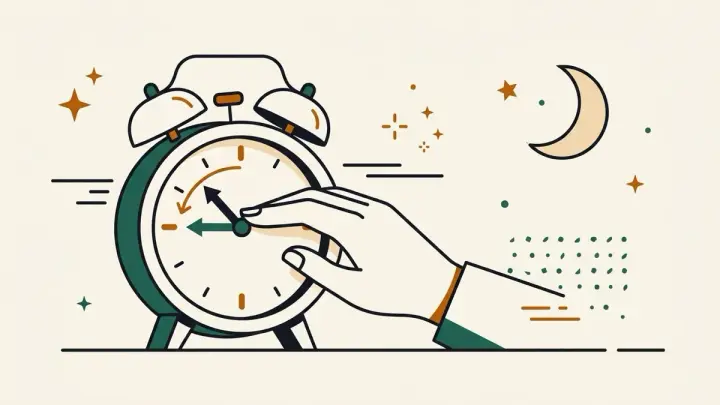
At 2:00 AM on November 1, 2026, clocks across most of the US fall back an hour to 1:00 AM. Gaining an hour sounds like a win, but plenty of people still feel off for a few days afterward -- and there's a straightforward reason why.
When does daylight saving time end in 2026?
DST ends November 1, 2026 -- the first Sunday of the month, as usual. The US House passed the Sunshine Protection Act in July 2026, but as of this writing it hadn't cleared the Senate, so the fall-back is still on the calendar under current federal law.
How to adjust your sleep schedule for daylight saving time
The American Academy of Sleep Medicine's public guidance is to shift bedtime later by about 15-20 minutes a night for two to three nights before the change, rather than taking the full hour-long shift all at once. The logic: once clocks move, your old bedtime is effectively an hour earlier on the new clock. Pre-adjusting means your body isn't caught off guard on November 2.
Why trouble sleeping after the time change is so common
Even a one-hour shift nudges your circadian rhythm, the internal clock that governs when you feel alert or sleepy. Most guidance frames the fall-back as easier to handle than the March "spring forward" (which removes an hour), but it can still throw off sleep timing for a few days if you don't adjust ahead of it.
A night-by-night daylight saving time sleep schedule
Rather than doing the math yourself, the DST Fall-Back Sleep Adjustment Planner takes your usual bedtime and generates a 3-night schedule -- shifting about 20 minutes later each night -- so you're already on the new clock's rhythm by the time it actually changes.
Try the DST Fall-Back Sleep Adjustment Planner →
Sources: American Academy of Sleep Medicine (aasm.org/daylight-saving-time-advice); Old Farmer's Almanac; AccuWeather; The Hill.