Before building our pet age calculator, we looked at how existing dog and cat age tools actually calculate their numbers — and most of them are still running math that veterinary groups have been publicly correcting for years.
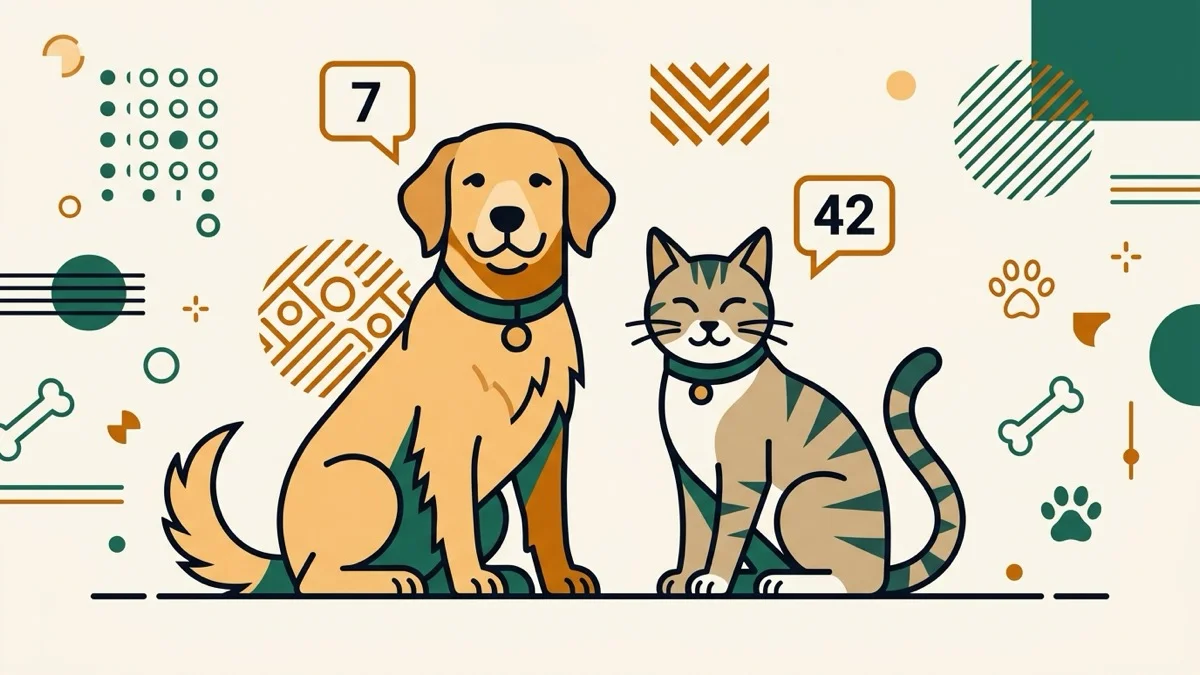
Is 1 dog year really 7 human years?
No — the American Veterinary Medical Association calls this a flat-out "old myth." The ×7 rule assumes a pet ages at the exact same rate every single year of its life, which isn't how biology works. A one-year-old dog isn't "7 human years old" in any meaningful sense — it's already sexually mature, developmentally closer to a 15-year-old human teenager. The ×7 rule badly understates how fast young pets mature and, just as often, overstates how "elderly" an older pet actually is.
Dog years to human years, the way vets actually explain it
The commonly-cited approximation looks more like this: a dog's first year is roughly 15 human years. The second year adds about 9 more, putting a 2-year-old dog at around 24. After that, aging slows down and levels off to roughly 4-7 more human years per dog year — a curve, not a straight line.
Dog age calculator by breed size — why it changes the answer
Here's the part most simple calculators skip entirely: after year two, breed size changes the rate. Small and toy breeds tend to level off around 4 years per dog-year; giant breeds age faster in their later years, closer to 7. Two dogs that are both chronologically 8 years old can be in genuinely different life stages depending on whether one is a Chihuahua and the other a Great Dane. Leaving out breed size is the single most common reason a dog age calculator gives an inaccurate result.
Cat age calculator — a simpler curve, same first two years
Cats follow the same first-two-years pattern (≈15, then +9 to 24), but without the breed-size split dogs have — cats don't vary in adult size anywhere near as much as dog breeds do, so a flat ≈4 years per year after that is the commonly used approximation regardless of breed.
Our calculator shows both numbers side by side — the modern, breed-aware result and the old ×7 number — so you can see exactly how much the outdated math is off by, instead of just trusting a single unexplained figure.