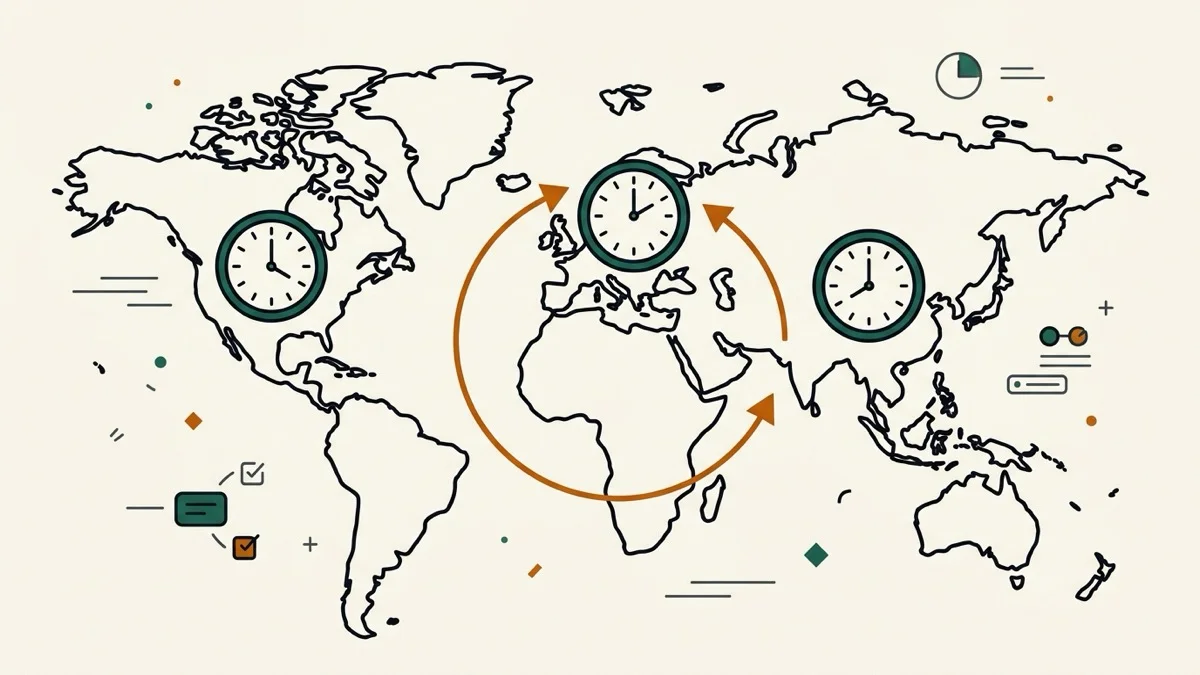
Before building FairMeet, we checked the timezone-overlap tools distributed teams already use — and confirmed a gap that anyone who's sat through a recurring meeting at the wrong hour will recognize.
World Time Buddy shows overlap, not who's paying for it
We checked World Time Buddy directly. It's a genuinely well-built snapshot tool — Seoul, Beijing, and Moscow's current times side by side, easy to scan. But that's all it is: a snapshot for one meeting. There's no concept of tracking that the same team keeps landing in the bad slot meeting after meeting, and Trustpilot/G2 reviews flag that even the paid tier caps you at 10 timezone slots. FairMeet instead scores every candidate hour with a 0–3 "Pain Score" per participant, so "how bad is this for each person" is an actual number, not a guess from staring at a grid.
timeanddate's traffic lights still only look at right now
timeanddate's Meeting Planner uses a green/yellow/red system to flag which hours suit each location — a nice touch. But it's still evaluating one meeting in isolation. Rotate meeting time fairly isn't something either tool is designed to help with; there's no "propose this time, then that time next week" logic anywhere in either product.
Who has to stay up late for meeting — answered, then rotated
FairMeet doesn't just name who has to stay up late this time — it looks for a second option that's almost as fair overall but shifts the worst slot to a different participant, so you have two good options to alternate between. No account, no server-side history — just two numbers-backed choices you and your team can actually take turns using.
A meeting time fairness score you can point to
"It felt unfair" is hard to act on. A Pain Score total and a named "hardest hit" participant, refreshed for every hour in the next 24, gives distributed teams something concrete to point to when deciding whose turn it is.